How to Write a Novel: The Midway Point

It’s been about three months since I started work on my novel, Rosetta, and a little over two months since I described my first impressions of writing it.  I hit 50,000 words last week. That’s a little over half my forecast completed word count, which means I’m near enough halfway through.  At the very least, I’m in the thick of things! And I’ve got some new reflections on the subject of writing a novel to tell you about.  Some of them are pretty surprising; at least in light of my first impressions. It’s taught me a lot about how to write a novel.

I’m so glad I have a plan

A quick one this. I’d never have made it this far without a plan, telling me who is where and what they’re doing at any one time.  Using a plan means that everything is always facing the right direction, even if I can’t keep track of every plot strand at once.  Not everyone writes using the same techniques. But I couldn’t imagine taking on this, or indeed another novel, without a plan. It’s not an especially detailed plan, more just  broad strokes of the plot. But I wouldn’t know how to write a novel without it!

Read More
All Write Now: Best Writing Music

Earlier this week I ambiguously tweeted that I’d written to Ludovico Einaudi. He’s the composer of, among many other beautiful piano pieces, The Waves.  I didn’t mean that I’d written a letter to him, though that’s how it came across. I only meant that I’d listened to his Islands album whilst writing. It’s some of the best writing music I have.

I tend to listen to music whilst working on my books, and was overjoyed to find Stephen King does the same, as he notes in his fascinating On Writing.  Whilst King prefers ‘loud music – hard rock stuff like AC/DC, Guns ‘N’ Roses and Metallica’, I prefer soft stuff – instrumental, electronic, classical…  Music that I wouldn’t usually spin in the car or that I’d learn the drums to.  Background music, I suppose, though I don’t want to mislabel any of the excellent albums below as merely sonic wallpaper.

Read More

How to Write a Novel: First Impressions

I remember far back into my childhood when I dreamed of writing novels.  It couldn’t be that hard, I reasoned.  I could write a page every night after school, and more at the weekends.  It would be just like reading a book: I’d find out what happened as I went along.  And for the record, I still think there’s mileage in my idea of an alternate medieval universe in which everyone is accompanied by their own gargoyle, but I’m learning now there’s a lot more to writing a novel than one seed of an idea. In fact, how to write a novel is a multi-faceted question.

Read More

Night Shade: A Fan Fiction Review

I’m not a fan of fan fiction.  I think using characters that other authors have put their love and imagination into is cheating and disrespectful – especially (read: inevitably) when the writing isn’t as good as the author’s own.  There can’t be much reward in it either – fan fiction isn’t part of the original story and is therefore in no way ‘real’ or ‘true’ to it.  I don’t see the point in it other than as a writing exercise, and even then it’s a half-baked activity – the characterisation and interplay between different characters has been established for you. But maybe it’s time for me to consider the genre in a new light. Maybe it’s time for a fan fiction review.

Getting my teeth into The Black Library

Recently, however, I read one of Jack Yeovil’s The Vampire Geneviève stories; Geneviève Undead.  Jack Yeovil is a non-de-plume of Kim Newman’s; he uses it when he writes for The Black Library, the publishing wing of tabletop wargames behemoth Games Workshop.  The Black Library publish stories set in the fictional universes of their Warhammer and Warhammer 40,00 games. 

Read More

How to Build a Book Cover II: Paperback

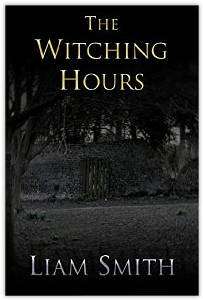
After self-publishing my novella complete with its cover art, I was desperate to get my hands on a physical copy of The Witching Hours.  I’m a supporter of ebooks and e-readers, but there’s something to be said for holding a book in your hands; feeling its shape and taking in the tactility of it.  I published my ebook though Amazon and CreateSpace, an Amazon company, offer a print-on-demand service for self-published authors.  I’d already done the hard work – writing the book – and I couldn’t wait to have a printed copy of it too. This how to design a book cover, and its interior too.

I found CreateSpace a little less user-friendly than Kindle Direct Publishing.   Nonetheless, it’s a fairly logical process and, like KDP, it begins with the trickiest bits – confirming your tax location and account details.  Once this is complete, you can start the fun stuff.

Getting started: dashboard and setting up your title

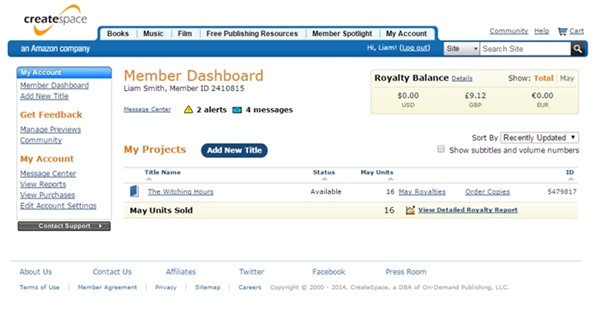
Createspace Member Dashboard

The member dashboard is your default page, and it is here that you can add a new title. This is first step of getting your book to the printing press.  Clicking ‘Add New Title’ first prompts you to enter the basic information about your book: title, author, series…  The bits you know like the back of your hand.  I found this really exciting. It really felt like I was placing my work out there into the world of printed books.

Read More